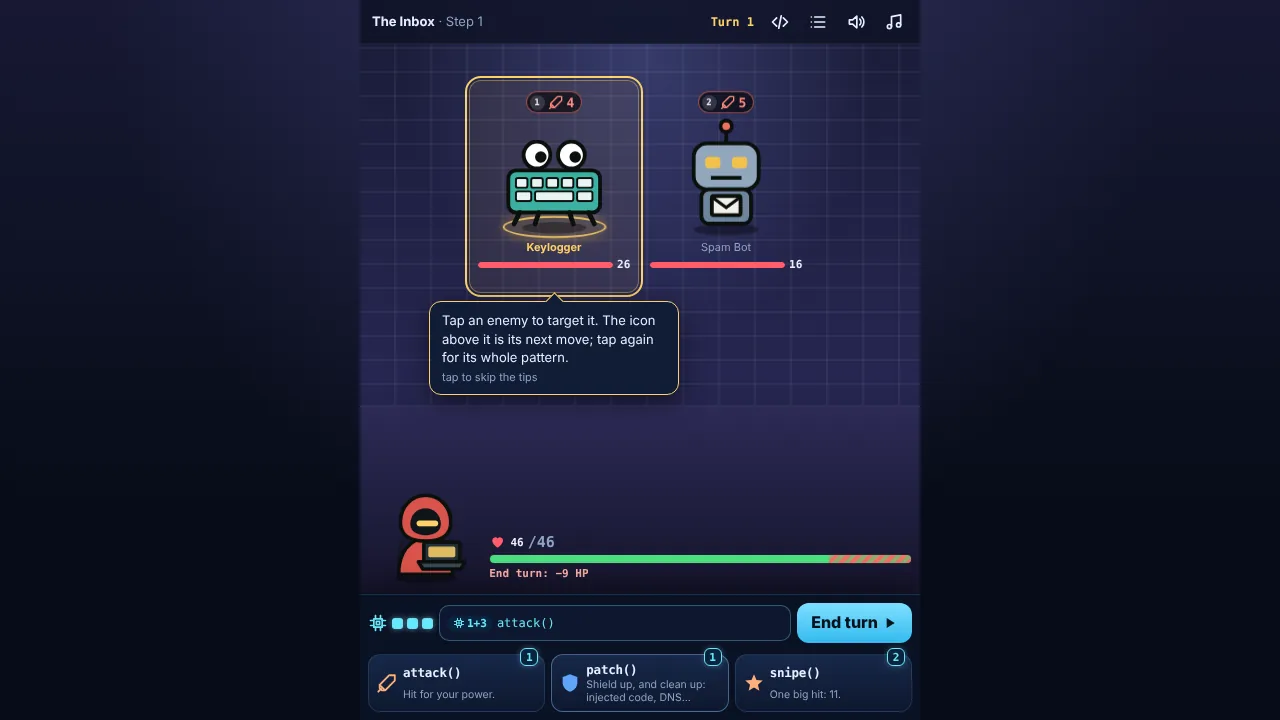
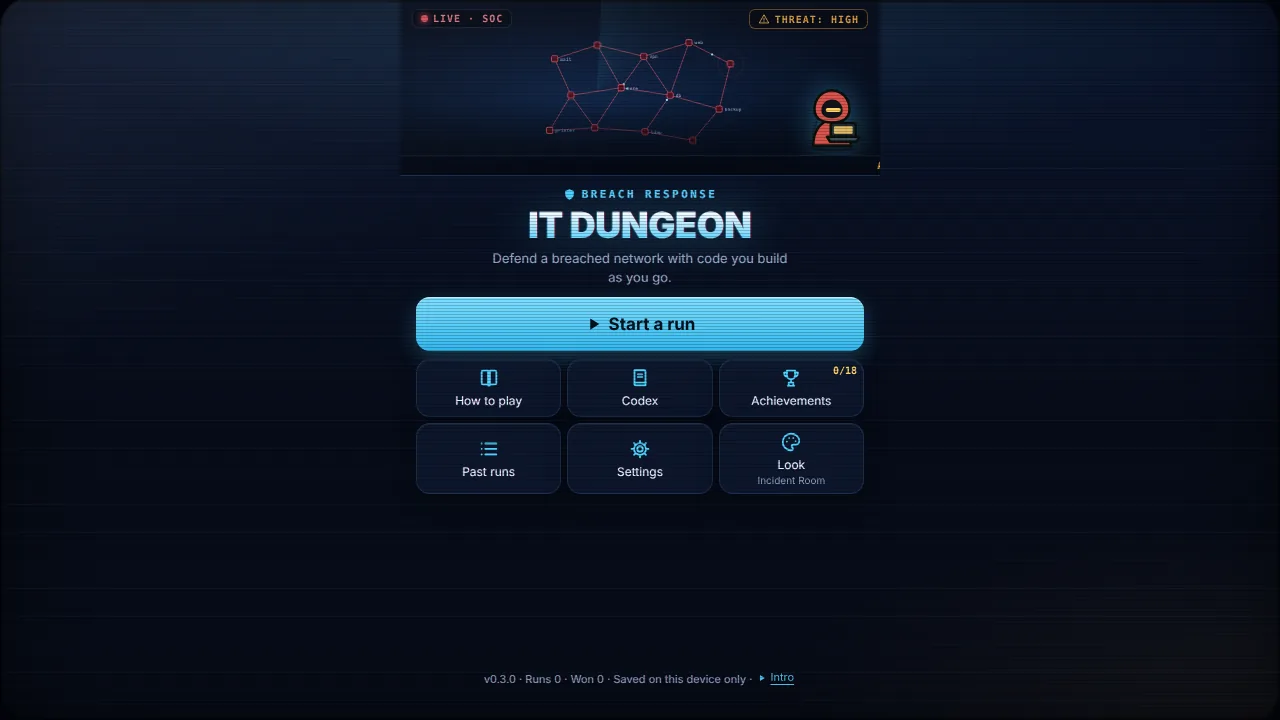
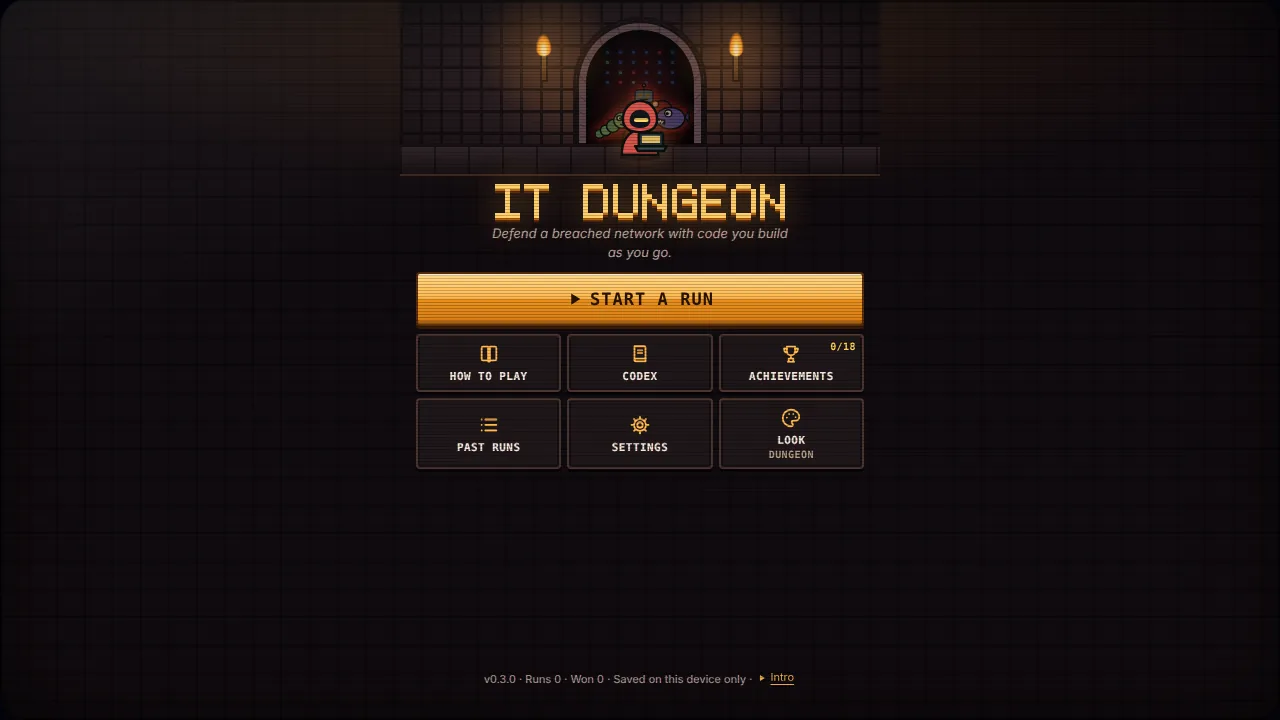
IT Dungeon is a turn-based roguelite I'm building to play in a phone's browser. A network has been breached, and you fight off real threats: phishers, worms, SQL injectors, cryptojackers, ransomware, a rootkit that hides from your loops, a DNS spoofer that redirects your hits, a zero-day nothing touches until you patch, an insider your shield doesn't stop, and a wiper that erases lines of your code.
Your weapon is real Python. You collect functions and run them with CPU each turn, and between fights you write a main() that spends whatever CPU you leave. Bad code costs you: a loop burns CPU for every enemy, and a missing indent is a real IndentationError that stops main() from running.
How a run plays
- Five classes build toward crits, thorns, elements (Volt, Heat, Chill, Corrosion), automation, or luck with
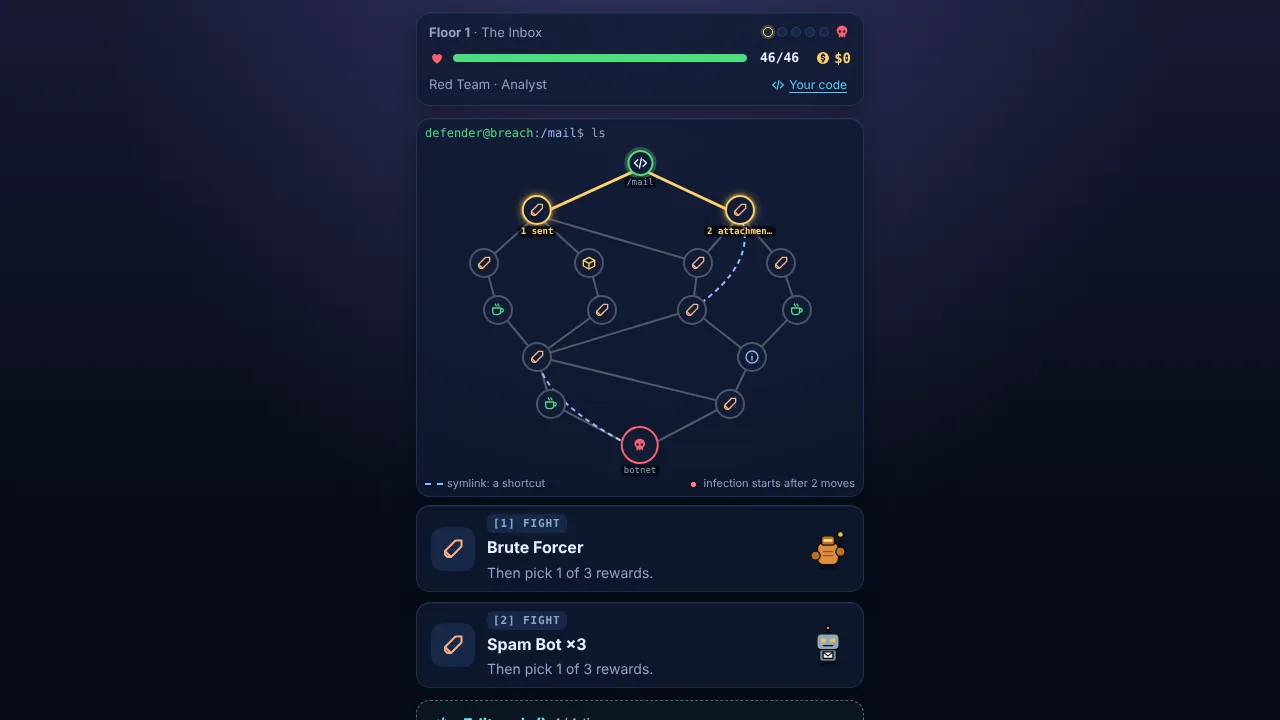
randint()dice. The first two are open from the start, and the rest unlock through achievements. - Each floor is a map of folders you
cddown. Routes split and merge, symlinks are shortcuts,?folders hold incidents, and an infection spreads a folder every move. - Every enemy shows its next move, and the HP bar shows what ending the turn will cost.
Quiz mode
Quiz mode puts one question at the start of each turn, from the pack you pick: Security+, Networking, or Linux. Right and fast makes it a crit turn. Wrong spawns a Bug in the fight. New facts come first, misses come back, and it aims for about 85% right. Every fact carries a short reason, checked against a real source, because a learning game that teaches something wrong is worse than none.
How it's built
Plain JavaScript, HTML, and CSS, with no libraries and no build step. The rules never touch the page, so the tests and a stand-in player run them in Node. The stand-in plays whole runs and reports win rates for each class, which is how I check the balance. Every number lives in JSON: the tuning, the gear, the dungeon, and the question packs (93 Security+ facts, 41 Networking, 27 Linux). The code on the gear is the code that runs, in a subset of Python the game interprets, and a check parses every piece. A fight fits one phone screen with no scrolling.
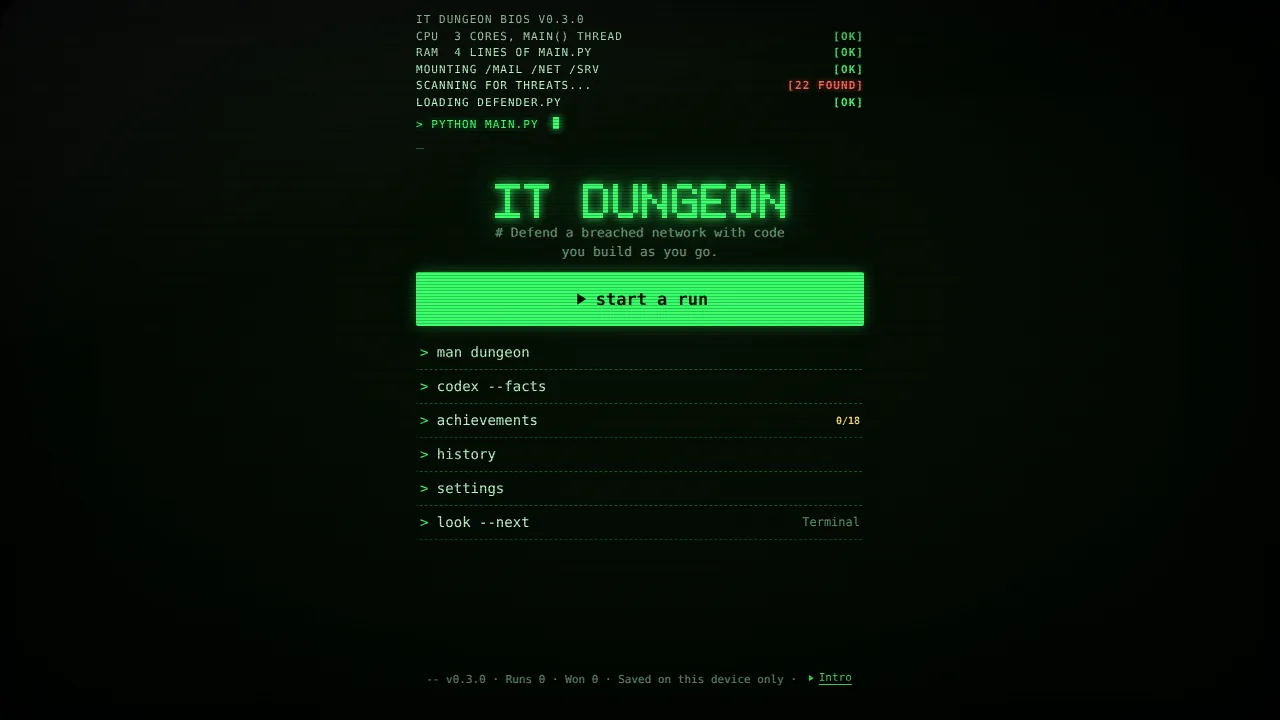
There are three looks (Incident Room, Terminal, and a 16-bit Dungeon), an intro, music that follows the fight, and pixel-art icons drawn in code. I'm building it with Claude Code, working from written plans and a list of open decisions I answer as I play it.
Media